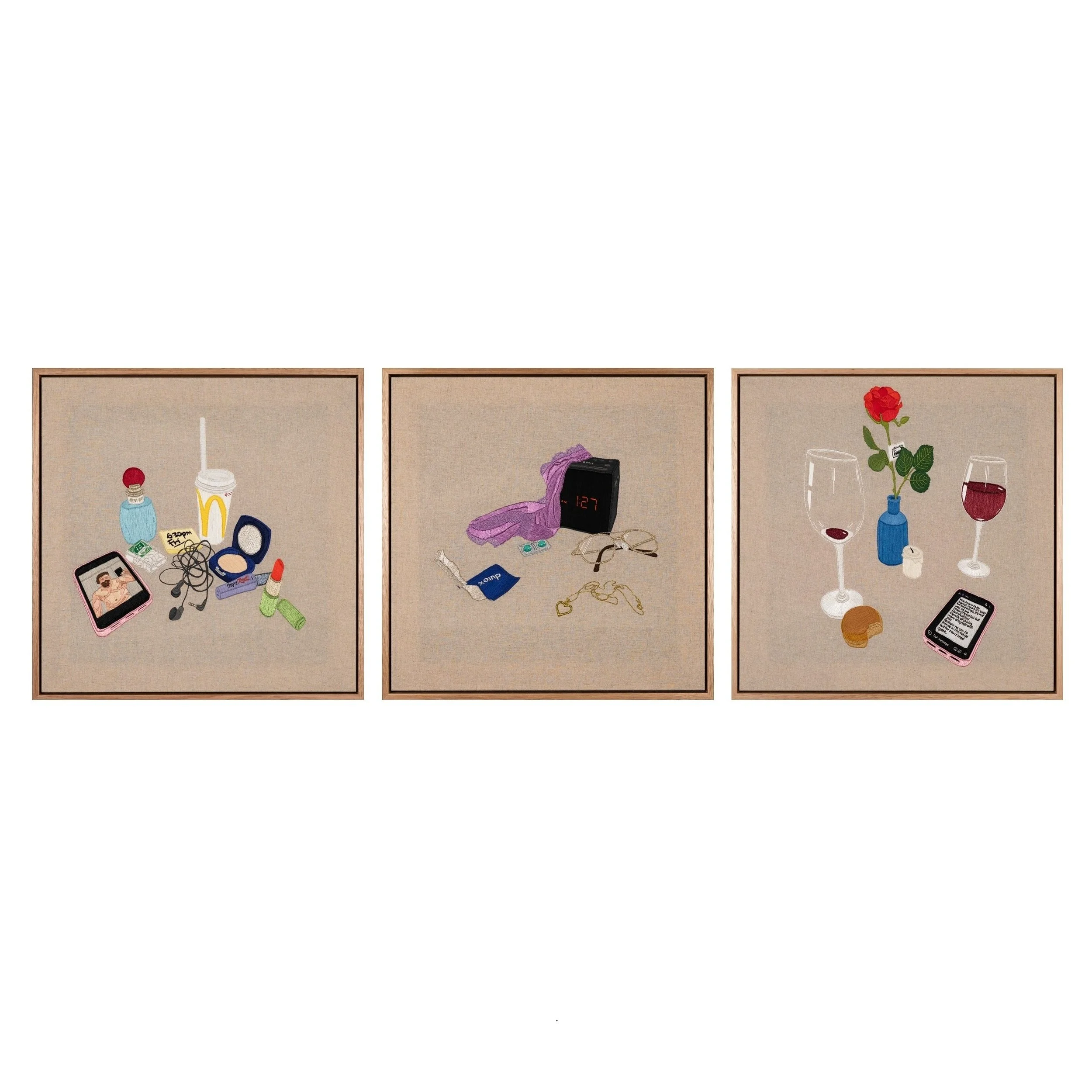
Intimacy series 2026
2026
Intimacy series
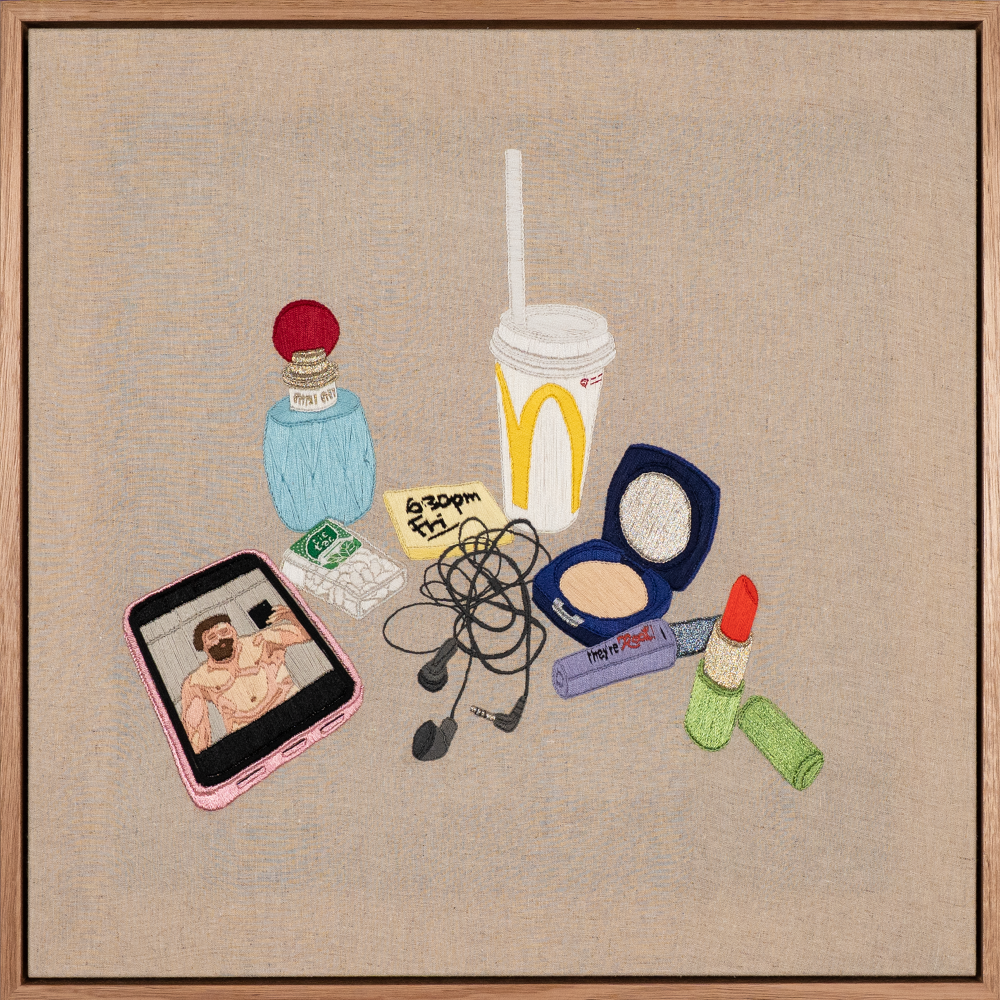
EMBROIDERY FLOSS ON LINEN 48 X 48CM
Match
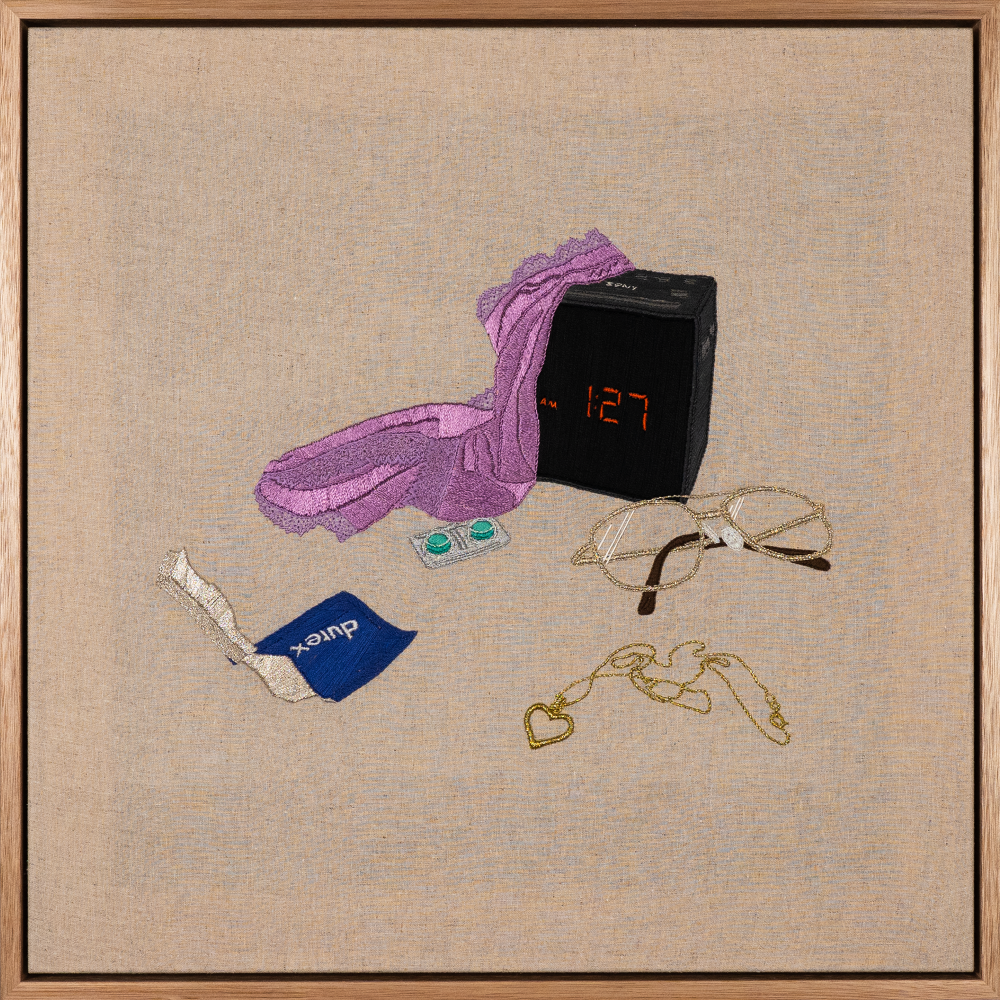
EMBROIDERY FLOSS ON LINEN 48 X 48CM
F**k
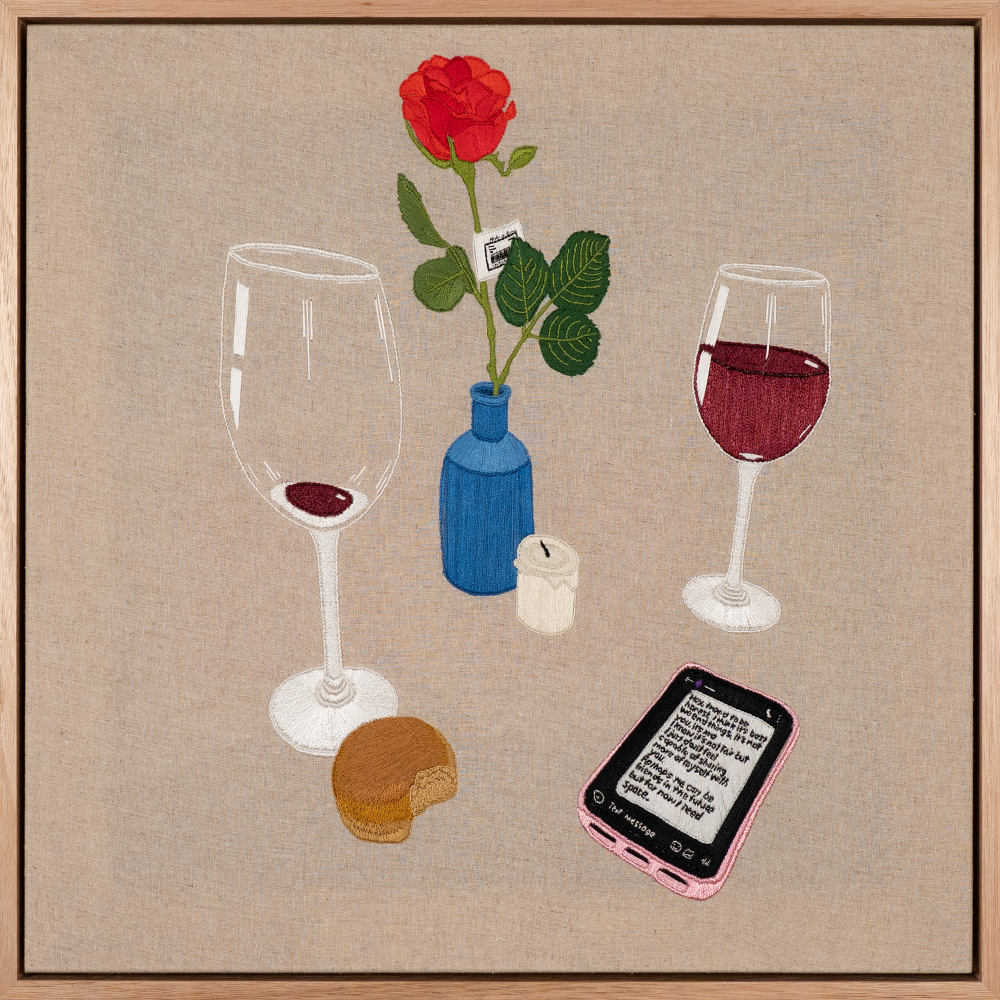
EMBROIDERY FLOSS ON LINEN 48 X 48CM
Ghost
It’s undeniable that dating apps have changed modern dating culture and the collective growing distrust and fatigue singles are feeling towards the apps is steadily rising. There’s plenty to unpack in how these platforms are affecting romantic relationships and redefining our outlook on intimacy. The shift comes as no great surprise considering the greater context of social changes currently going on. The trend towards hyper-individualism, ‘main character energy’, political polarization, pushback against women’s rights, and the fragility of white male entitlement, is all being amplified by online platforms.
Superficiality, ghosting, disrespect and lack of accountability online is off the charts. There’s a sad irony in how offensive behaviour has become normalised in digital spaces fundamentally designed for human connection. It's like we're collectively losing our social skills in this new normal, economy of digital social exchanges.
Academics researching digital intimacy are describing what most of us already feel with some truly depressing findings on the impacts of dating apps, the rise of hook-up culture, ‘situationships’ and how we're connecting more broadly. Seems there's an actual upward trend in difficulty forming long-lasting bonds and real intimacy.
Ten years ago Vanity Fair sounded the alarm with its sensationally titled article “Tinder and the Dawn of the Dating Apocalypse,” arguing that dating apps had ushered in a hit-it-and-quit-it hookup culture driven by instant gratification. The piece depicted Tinder as a game rigged in favour of the boys, bleakly suggesting that when faced with a perceived abundance of options, men pursue a short-term mating strategy and no longer have any reason to commit to serious relationships.
Described as the “UberEATS of relationships” dating apps are blamed for contributing to the commodification of individuals and encouraging a disposability akin to mass consumption. With endless potential matches just a swipe away, contemporary culture has become accustomed to having a seemingly endless supply of potential romantic and sexual partners. Relationships have become a form of entertainment, a gamified “relationshipshopping” experience where users can date secure in the knowledge they can always return to the marketplace for another bout of shopping. This is redefining views on relationships and intimacy within modern society, leading some academics to argue that dating apps represent a shift towards a "post-romantic" view of love, where relationships are seen as efficient and risk-free interactions, neglecting the emotional complexities and vulnerabilities of true intimacy.
As our approach to relationships changes, so too have our views on physical intimacy. Traditional ideas about sex are being overtaken by the hypersexuality and eroticism of contemporary culture, with the ease and speed of dating apps allowing for a ‘hook-up’ culture to thrive. Straying further away from traditional ideas, modern daters are increasingly viewing intimacy as a means of satisfying desire, forming superficial and gratification-based relationships. Rooted with insecurity and the conflicting desire to tighten and loosen bonds simultaneously, individuals create fleeting connections with one another rather than meaningful relationships. Some scholars going so far as to say that subsequently, life-long monogamous relationships are slowly disappearing.
In an aim to present themselves in the best possible way to others, dating app users can curate a version of themselves by exhibiting a series of masks and roles, signalling their desirability and perceived compatibility through carefully crafted photos, profiles and messages. Matching this way can create a sense of false intimacy, assumptions and fantasies about a potential partner based on incomplete information, a connection that is not rooted in the complexities of real-life interactions. Disappointment also often plays out when the reality of putting in the emotional investment and building a real intimate relationship proves more challenging than instant connection.
Pseudo-intimacy is another phenomenon seemingly amplified and enabled by the ease of connection accelerated by dating app culture. Pseudo-intimacy refers to a false or superficial sense of closeness in a relationship, where behaviours mimic genuine intimacy but lack true emotional depth. It's a form of "fake" connection often used to avoid vulnerability or manage anxiety, characterized by a lack of deep emotional sharing and a focus on external behaviours that resemble intimacy, like physical intimacy and sex without emotional connection.
Fearing rejection or discomfort, individuals engaging in pseudo-intimacy may avoid vulnerability by not sharing their true thoughts and feelings. Instead of being authentic and vulnerable, they may wear masks to present a desired image, hiding their true selves and emotions to gain approval or avoid conflict, often leading them to play a role in a relationship, acting in a way that they think will be accepted or loved, and ultimately perpetuating cycles of unmet emotional needs.
So, if everyone knows the hell of dating apps, why do we keep using them? Have they so thoroughly saturated the dating landscape that they now feel like the only viable way to meet someone? Can we combat the decline of intimacy and rise of pseudo-intimacy?
In the meantime, we continue to match, fuck, ghost, repeat…